



Celebrating the University’s Longest Serving Tenured Professor


Attend the Balch Symposium
Join the Department of Chemistry in celebrating Alan Balch's illustrious career on November 14th, 2025 in the multi-purpose room, on the 2nd floor of the UC Davis Student Community Center. The program is set to be filled with lectures highlighting Balch's contributions, followed with dinner.
When Alan Balch arrived at UC Davis as a faculty member in 1970, the campus looked incredibly different than it does today. Ghausi Hall and the Mathematical Sciences Building were nonexistent, the land occupied by hogs; the Whole Earth Festival was in its first year; and the student population numbered just under 13,000 compared to the 40,000 plus students roaming campus today.
Much has changed about the university in the 55 years since Balch’s appointment to the Department of Chemistry, housed in the College of Letters and Science at UC Davis. But two things have remained constant: his innovative passion for scientific discovery and his continuous commitment to mentorship.
Now a Distinguished Professor Emeritus with more than 590 academic publications to his name and numerous accolades, Balch, who is the longest serving tenured professor at UC Davis, is being celebrated with the Balch Symposium on Nov. 14. The symposium will consist of lectures from academics around the globe who will highlight Balch’s contributions to the field of chemistry.
“I’m just starting to realize that I’m retired,” said Balch, who shows no signs of slowing down and currently mentors undergraduate students in his research lab. “The idea that I couldn’t do another experiment really bothered me.”
As he sat in his office on a late summer day, Balch reflected on the trajectory of his career in the sciences.
The path took many different twists and turns. I could not have anticipated everything and would have stared in wonder at many of the things that we found.
— Alan Balch
A legacy of discovery and innovation in chemistry
Balch’s office on the second floor of the Chemistry Building is the quintessential example of a professorial space. Covers of various academic journals hang on the walls and door, shelves are stuffed to the gills with books and various papers are scattered across his desk. The décor is one of an inquisitive mind, one that’s constantly shuffling through ideas.

Balch has dedicated his career to developing analytical methods that enable the discovery and structural investigation of new and existing molecular compounds. For much of his career, he studied complex molecules that contain metal atoms, which include molecules that can be used in batteries and microelectronics, and as contrast agents for medical imaging.
But underlying it all is a fascination with crystallization and colors.
Take his research on molecular oxygen activation, for instance. Supported by the National Institutes of Health (NIH) for roughly 26 years, Balch and his lab conducted foundational research on the nature of hemes — molecules that transport oxygen in our blood. The research started in collaboration with Balch’s colleague Gerd LaMar, now a professor emeritus in the Department of Chemistry.
“It all comes back to color,” said Balch, referencing the process of bodily bruising. “When you get a bruise, it’s going to change color. It will start off as kind of purple-y, that’s spilled blood. Then it will turn green, that’s a pigment called biliverdin, and then it will turn yellow, which is bilirubin. That’s the stuff the body has to get rid of. That’s the stuff that causes jaundice.”
Hemes are critical to this recycling process in the body, the evidence of their functionality manifesting visually as the color changes described by Balch.
“The NIH wanted to understand these fundamental processes,” Balch said. “Why do you have hemes in your body? What does it do? How does it bind to oxygen? And how come it doesn’t always decompose?”
Balch and his colleagues conducted test tube research analyzing the chemical reactions of oxygen with the body’s colored pigments. Over the years, they successfully identified catalytic and intermediate molecules pivotal to this biological process, leading to a more comprehensive understanding of it.
But Balch is perhaps best known for his work structurally characterizing soccer ball-shaped and cage-like carbon molecules called fullerenes, which have applications in medicine, electronics and materials science. Working with the late Marilyn Olmstead, a professor emerita of chemistry at UC Davis, they developed a technique that enhanced the ability to image fullerene molecules, outperforming the standard crystallization methods at the time.
The technique, which is called co-crystallization, reliably illuminated the 3D structure of fullerenes in fine detail. It was adopted worldwide.
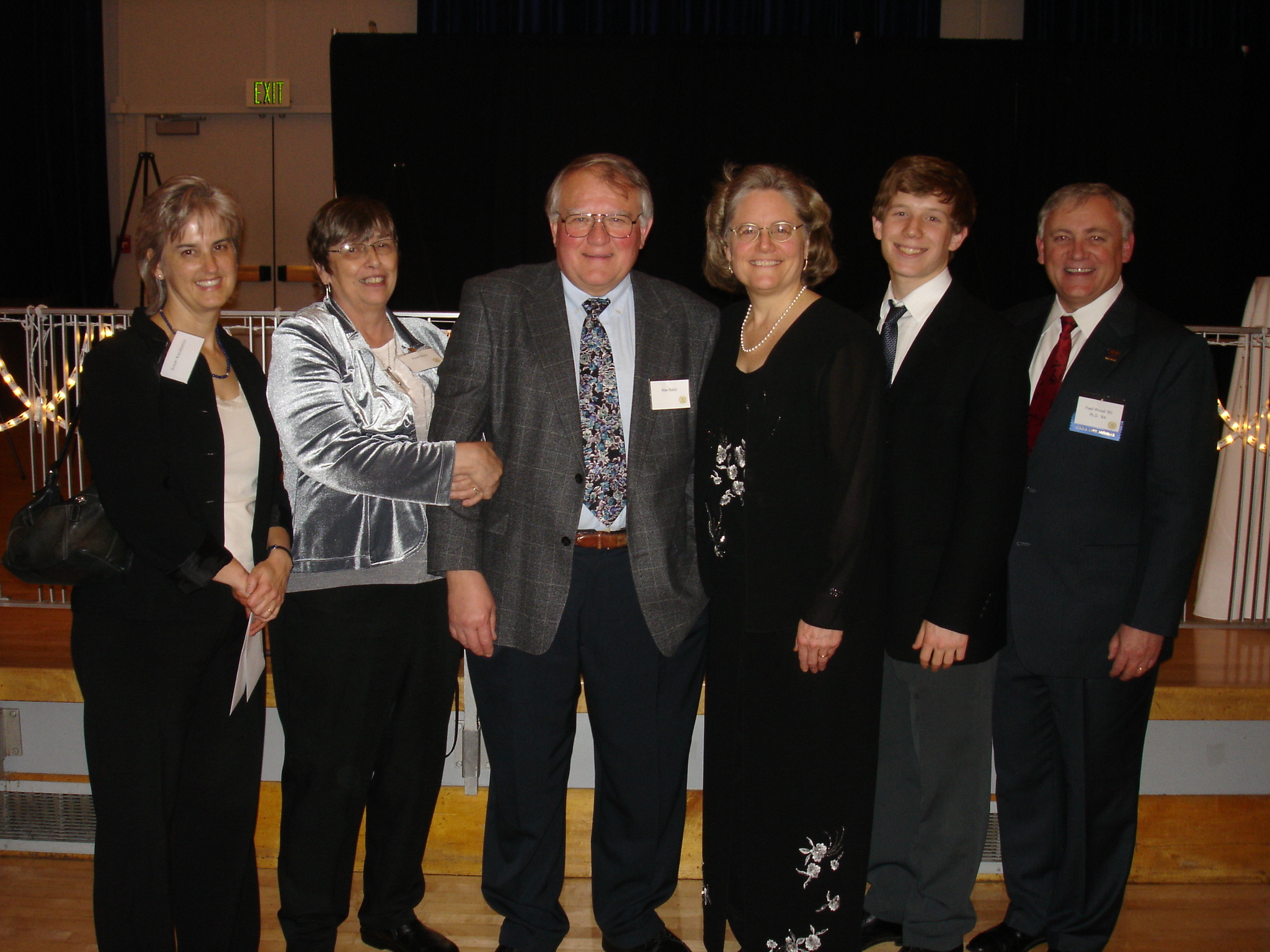
Mentoring generations of UC Davis chemists
Catherine Hunt, who was president of the American Chemical Society in 2007, remembers the first time she met Balch. The year was 1977 and she was a new chemistry graduate student at UC Davis. Like others in her cohort, Hunt was rotating through labs, trying to determine who she’d like to work with. She was intrigued by Balch’s pitch for his lab and his personality.
He was very quiet and kind of unassuming, but when he started talking about chemistry, he would light up the room — I found him fascinating because not only did he really understand it, but he could communicate it. He could make you feel that excitement of what it would be like to be in a lab making these molecules.
— Catherine Hunt
“And when he talked about the work in his lab, he didn’t talk like some of the other professors did,” Hunt added. “He credited his students; it really felt like you would be part of a team.”
Hunt joined Balch’s lab and started research on synthesizing catalysts for chemical reactions.
As much as Balch was a teacher and mentor to Hunt, she also found him to be a constant student. He was a good listener, one who valued the lessons that could be learned from younger generations.
“He didn’t hesitate to bring his students into things,” she said. “He really brings out the best in people and makes them feel like they could be their whole self.”
Sarah Costa, who graduated from UC Davis with a Ph.D. degree in inorganic chemistry in 2025, also relished her experience as a graduate student in Balch’s lab. Costa conducted research on gold complexes, analyzing their fundamental structures, emissions and potential as biological probes.
“Alan is my ideal professor,” said Costa, who is now a postdoctoral researcher at UC Santa Barbara.
Balch was supportive outside of the lab too. When Costa was unable to visit her family for the Thanksgiving and winter holidays, Balch invited her to celebrate the occasions with his family. When she was unable to afford anesthesia to get her wisdom teeth removed, Balch loaned her money for the procedure.
“He really cares about you as a person,” she said. “I talk to him almost every other week still.”

The value of curiosity and serendipity in science
Even today, Balch is still mentoring. Aryan Ghiasi, a third-year undergraduate student majoring in pharmaceutical chemistry, is currently conducting gold chemistry research in the Balch Lab.
“I have learned so many new techniques and how to handle some rather complex processes in such a short amount of time,” said Ghiasi. “The environment has always made me happy to be going to the lab each and every time I go.”
“Even more important is how stress-free it is to work in the lab,” Ghiasi added. “He knows that mistakes are always part of the process and if, for instance, I make a bad batch of product or I lose a lot of product during purification due to an error, I always feel comfortable owning up to it.”
For Balch, mistakes and detours in science are critical to the learning experience. What’s more, he never fails to emphasize the importance of curiosity and serendipity in science.
“Discovery is a really big part of science,” Balch said. “And I think our drive to make new things has really overshadowed the importance of discovery.”
At the college level, you should be willing to not just do what you started to do, but to branch out and try new things. You don’t always know what you’re going to find and sometimes things might not be useful until 25 years down the line.
— Alan Balch
In a time when the value of scientific curiosity is being questioned, Balch goes to bat for it.
“Take some short detours and see what happens. Things may not always work but sometimes they do,” he said.
“They did big time for me with these fullerenes,” he added as he held a fullerene model, one of a few that sits permanently on his desk.
The model serves as a reminder of the intertwined nature of curiosity and discovery.
YOU MAY ALSO LIKE THESE STORIES
A Career Built in Deep Time
Over the course of her career, Distinguished Professor Isabel Montañez has created a research niche in the fields of geochemistry and paleoclimatology: applying an Earth systems science approach to recreate Earth from eons past. For her monumental work in the geology field, Montañez received the Geological Society of America’s Arthur L. Day Medal.

Building a Space for Academic Rigor and Empathy: Tracing the Origin of a Chemist with Jesús Velázquez
As a UC Davis associate professor in the Department of Chemistry at the College of Letters and Science, Jesús Velázquez employs his chemistry expertise to synthesize materials useful for environmental remediation, transforming carbon dioxide-based waste streams, and energy conversion and storage.