


How the Shape of DNA Impacts Human Health with Mariel Vázquez


Professor Mariel Vázquez fished out the headphones and placed them atop the desk in her office in the Mathematical Sciences Building. She started uncoiling the mess.
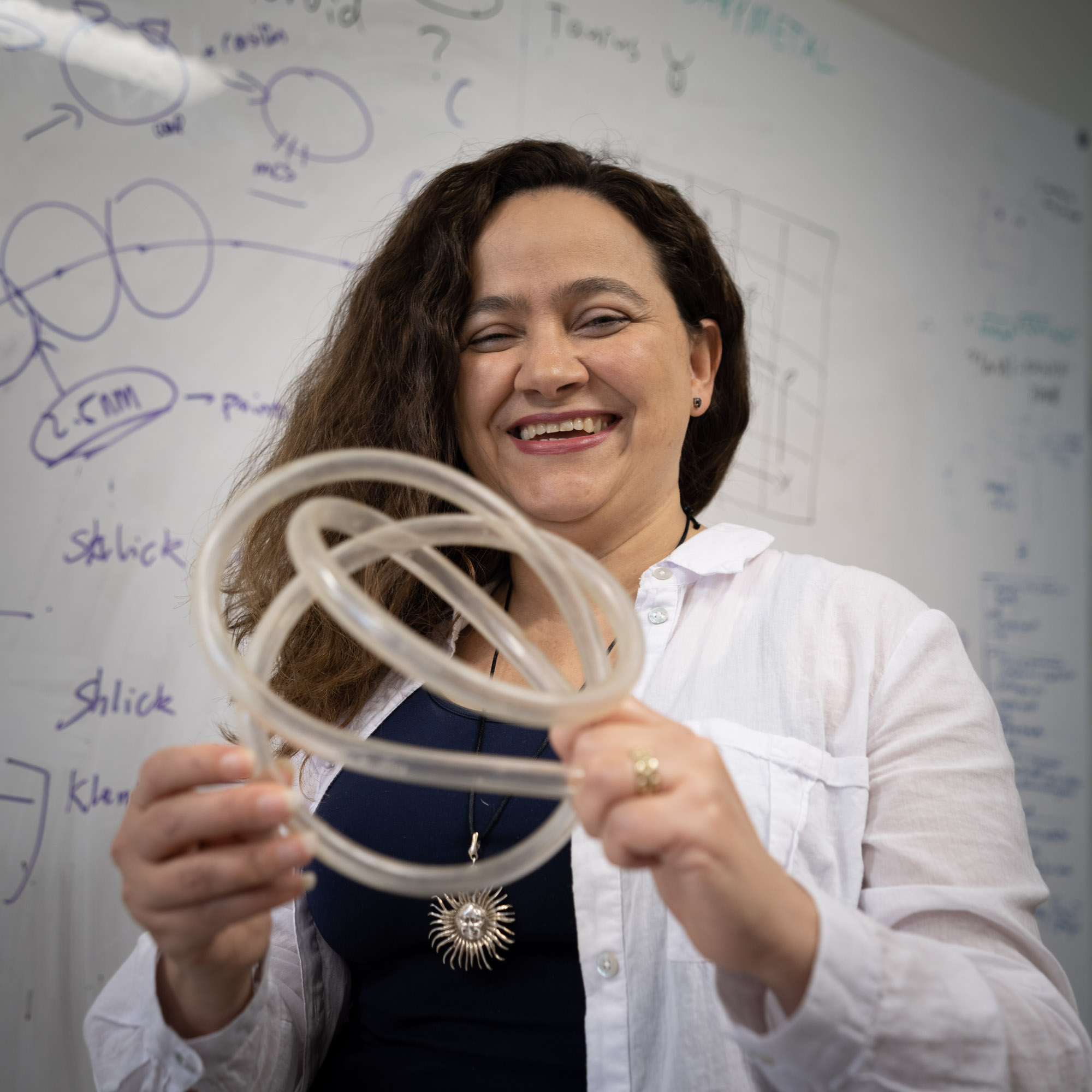
“Mathematicians love the beauty of knots,” said Vázquez. “They love the underlying structures that can be very abstract and very complicated.”
She laid the cord as flat as she could, straightening it across the desk. A tangled loop caught her eye.
“Look, there’s a knot,” she said. “It formed there by itself; I didn’t tie it.”
Knots are a part of nature. From pocketed headphones to carelessly packed garden hoses, they find ways to manifest in strings and loops. This isn’t just a truth of mathematics; it’s a truth of biology. In fact, DNA molecules can also get tied into knots.
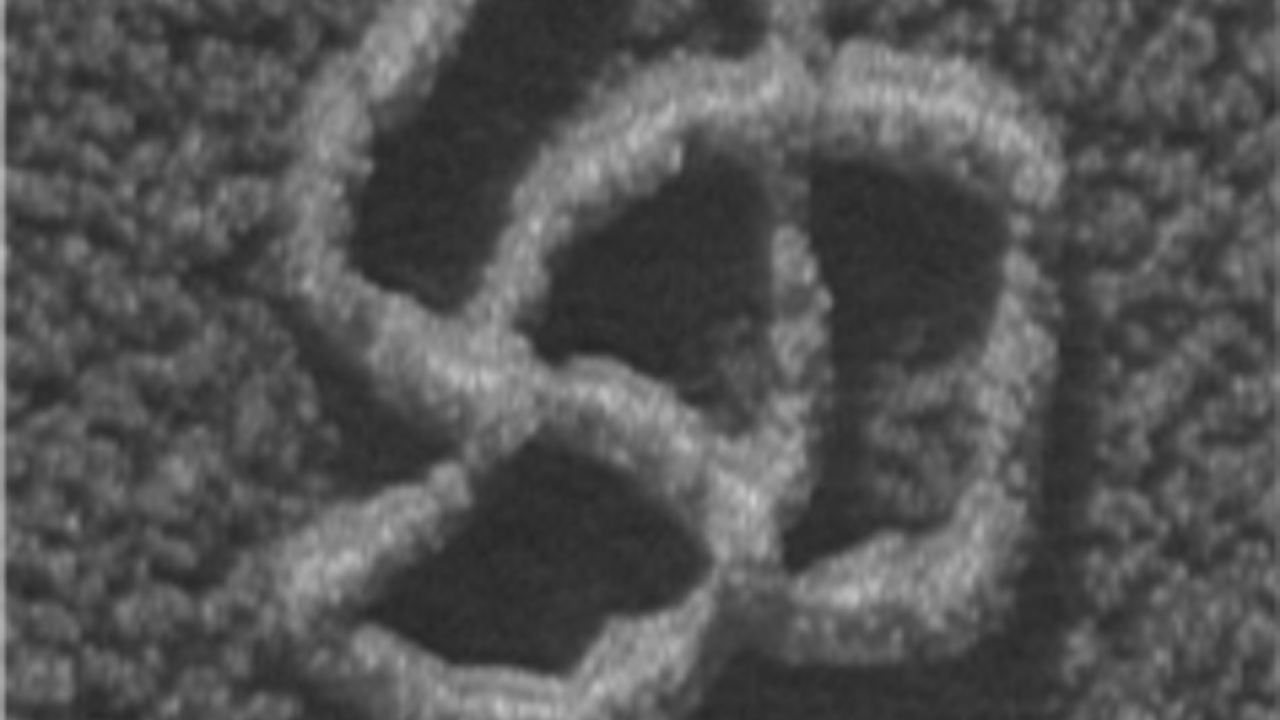
According to Vázquez, if you straightened out the chromosomes found inside a human cell nucleus, you’d have a six-foot-long chain. To fit inside the nucleus, this chain has to be packaged in a compact but functional manner. Enzymes snip and repair this DNA chain to fulfill different functions. In the process, they create different entanglements.
“The chromosomes fit in a tiny, tiny environment and yet, they are accessible for anything that the cell needs,” said Vázquez. “The enzymes and the cellular structures are managing a very careful packaging of the DNA, where each part of the sequence is accessible for processes like replication and transcription.”
The study of such looped shapes is called topology, and Vázquez applies her training in this area of mathematics to fundamental questions about DNA structure and functionality.
“We use tools from low-dimensional topology to study the entanglement of DNA in small environments and to study the mechanism of enzymes that bind to DNA molecules and change their geometry and topology,” said Vázquez. “We want to come up with quantification of the entanglement with models on how this process works.”
From Mexico to UC Davis: Mariel Vázquez’s path in science
As a child, Vázquez loved to count. She’d count tiles and pebbles, finding patterns in the world around her. This pattern-finding predilection extended to her academic interests. Algebra, geometry and calculus all naturally held Vázquez’s attention. In high school, she took a biology class and learned the central dogma of molecular biology (DNA encodes RNA, RNA encodes proteins).
“At that moment, I decided I want to do something that combines mathematics and biology,” said Vázquez.
Vázquez enrolled in the National Autonomous University of Mexico, located in Mexico City. She described higher education in Mexico as a mixture between the U.S. and European university systems. First-year students, she said, must declare a discipline of study from the get-go. Faced with a tough choice between math and biology, Vázquez chose math.
During her early college years, Vázquez found herself invigorated more and more by topics traditionally labeled as pure mathematics but felt discouraged by the unfounded notion that pure mathematics is divorced from application. One day, Vázquez saw a poster advertising a series of lectures about knots and DNA. While she’d always wanted to combine math and biology, this was the first time Vázquez had seen such interdisciplinary research in action. She knew she had to get involved.
Interdisciplinary research at the intersection of math and biology
After receiving her undergraduate degree, Vázquez headed to Florida State University in Tallahassee, where she enrolled in a mathematics Ph.D. program. She studied with De Witt Sumners, now a distinguished professor of mathematics with the university. With Sumners, Vázquez started using mathematical methods to better understand how DNA recombination affects DNA topology. She was part of the Program in Mathematics and Molecular Biology (PMMB), a national training program.
“As part of PMMB there were many people from many different disciplines doing interdisciplinary research, applying mathematics to molecular biology,” said Vázquez, who noted that answering the big questions of biology requires interdisciplinary approaches.
Following graduation, Vázquez secured a postdoctoral research position at UC Berkeley in a lab studying the effects of radiation on DNA. Like snipping enzymes, radiation can cut DNA, damaging it in the process. Vázquez spent her postdoc learning about DNA repair pathways and the biophysical mechanisms of repair induced by radiation events.
After five years of research, Vázquez started researching and teaching at San Francisco State University. In 2014, she joined the UC Davis faculty with a dual appointment as a professor of mathematics as well as microbiology and molecular genetics. She was part of the first cohort of academics brought to UC Davis by the Center for the Advancements of Multicultural Perspectives on Science (CAMPOS).
DNA topology and human health
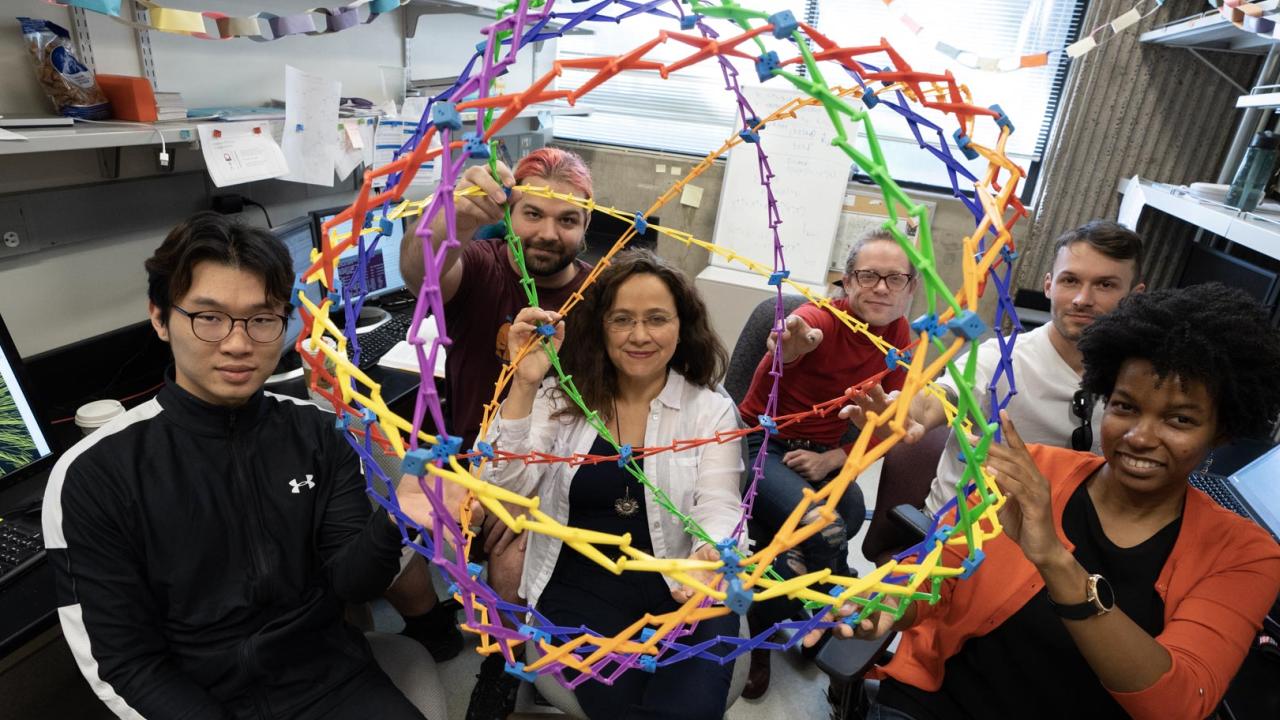
The makeup of the Topological Molecular Biology lab, which Vázquez runs with Professor F. Javier Arsuaga, of the Department of Molecular and Cellular Biology and the Department of Mathematics, at UC Davis reflects the university’s commitments to inclusivity and interdisciplinary research. Ph.D. students in her lab come from a variety of graduate groups, including Integrative Genetics and Genomics, Mathematics, Physics and Biostatistics.
“We try to bring together people who traditionally speak different languages, scientific or otherwise,” said Vázquez. “The moment you have diversity in a group, there are better ideas.”
As biology becomes more quantitative, Vázquez said life sciences students can’t afford to balk at mathematics.
“There’s a massive amount of data pouring out of equipment in the labs,” she said. “You need to be quantitative to know how to parse that information and to trust that what you’re doing is meaningful.”
Vázquez’s research literally unravels the mystery of how DNA is packaged inside our cells and how changes to its shape — and the myriad molecules influencing it — work in healthy and diseased cells.
“We start with an important problem from biology and then we translate it into a problem in mathematics, computer science, statistics or physics, we work on it, but always keeping an eye on the original motivation and the relevance to biology,” she said.
Vázquez and her team’s quantitative understanding of the cellular mechanisms acting on DNA mechanisms could help inform translational research on diseases that manifest first at the molecular level.
“The ultimate goal of my research is to uncover the multiple shapes of DNA and to achieve a deep understanding of the contributions of DNA topology to a healthy cell,” she said.
A version of this article originally appeared on the UC Davis College of Biological Sciences website.
YOU MAY ALSO LIKE THESE STORIES

Equations in the Sand
Mathematics permeates our lives. It’s there even when it escapes our comprehension. Anne Schilling discusses the predictive power of mathematics and her research on “Markov chains,” which are probability models that describe the sequence of events/states based on the past. It’s a concept that can be applied to a lot more than just your dresser drawer, including weather, voting procedures and quantum physics.
Math All the Way Down
The study of our ever-shifting, tangle of a genome is called topology. Javier Arsuaga harnesses this area of mathematics in tandem with machine learning and computational modeling to investigate how diseases, like breast cancer, spread.