As humanity reckons with a climate shaped by a legacy of burning fossil fuels, implementing solutions we already have requires large-scale coordination and overcoming social challenges that stunt action.
In a new study appearing in the Proceedings of the National Academy of Sciences, UC Davis researchers challenge the idea that the volcanic eruptions triggered a single global, environmental collapse all at once. Rather, the devastation and environmental collapse on land happened regionally and in stages.
Fossil fuel consumption, among other sources of pollution, have resulted in increasing atmospheric and oceanic temperatures, leading to ice sheet melt and unprecedented shifts in our environments. New research from an international team of scientists suggests that these recent, rapid warming conditions exist within a larger climatic pattern — one that has been persistently driven by extraterrestrial forcing.
New research from the University of California, Davis, the Chinese Academy of Sciences and Texas A&M University reveals that massive emissions, or burps, of carbon dioxide from natural earth systems led to significant decreases in ocean oxygen concentrations some 300 million years ago.
Our planet’s history is one of extreme climate cycles that repeat across time, with insights into the Earth’s previous responses still accessible today. This is part of what Isabel Montañez is working to understand — what these moments might teach us about our changing climate and future climate conditions.
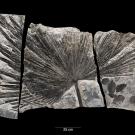
Palm trees in Alaska, crocodiles in Wyoming: Fossils show that Earth’s temperature has changed over hundreds of millions of years. Now a new study has produced a curve of global mean surface temperatures over the past 485 million years.
Over the course of her career, Distinguished Professor Isabel Montañez has created a research niche in the fields of geochemistry and paleoclimatology: applying an Earth systems science approach to recreate Earth from eons past. For her monumental work in the geology field, Montañez recently received the Geological Society of America’s Arthur L. Day Medal.