Melting and breaking icebergs in the far-off, northeastern region of the Pacific Ocean can weaken a massive current system in the Atlantic Ocean, according to a University of California, Davis study published in Nature Communications.
Fossil fuel consumption, among other sources of pollution, have resulted in increasing atmospheric and oceanic temperatures, leading to ice sheet melt and unprecedented shifts in our environments. New research from an international team of scientists suggests that these recent, rapid warming conditions exist within a larger climatic pattern — one that has been persistently driven by extraterrestrial forcing.
Some of the rainiest places on Earth could see their annual precipitation nearly halved if climate change continues to alter the way ocean water moves around the globe. In a new study, scientists revealed that even a modest slowdown of a major Atlantic Ocean current could dry out rainforests, threaten vulnerable ecosystems and upend livelihoods across the tropics.
In a study recently published in Geochimica et Cosmochimica Acta, an international research team analyzed teeth from 14 different primates, including one human, to better understand the rainfall or water input patterns across their lifetimes.
New research from the University of California, Davis, the Chinese Academy of Sciences and Texas A&M University reveals that massive emissions, or burps, of carbon dioxide from natural earth systems led to significant decreases in ocean oxygen concentrations some 300 million years ago.
An international team of geoscientists led by a volcanologist at Rutgers University-New Brunswick and including Maxwell Rudolph, associate professor in the UC Davis Department of Earth and Planetary Sciences, has discovered that, contrary to present scientific understanding, ancient volcanoes continued to spew carbon dioxide into the atmosphere from deep within the Earth long past their period of eruptions.
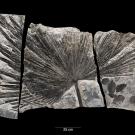
Palm trees in Alaska, crocodiles in Wyoming: Fossils show that Earth’s temperature has changed over hundreds of millions of years. Now a new study has produced a curve of global mean surface temperatures over the past 485 million years.
Over the course of her career, Distinguished Professor Isabel Montañez has created a research niche in the fields of geochemistry and paleoclimatology: applying an Earth systems science approach to recreate Earth from eons past. For her monumental work in the geology field, Montañez recently received the Geological Society of America’s Arthur L. Day Medal.