This past month, UC Davis Girls Who Code hosted the first campus hackathon dedicated to women and non-binary individuals. The event, titled Her Hacks, was a smashing success with around 100 students participating in the ideation and design of a product dedicated to social impact, sustainability or student life.
White abalone shells are magnificent structures. Translucent during the marine snail’s juvenile days, the extremely durable shell increases in opacity as the organism ages, gaining its paint-splatter-esque red, brown and white coloring from the algae it eats. But abalone, along with other marine organisms, are facing a crisis, one that affects the integrity of their shells.
Scientists at the University of California, Davis, in partnership with the Mars Advanced Research Institute, have announced a significant breakthrough in the production of low-calorie sugar substitutes, such as allulose. This discovery could help address one of the primary obstacles to the widespread adoption of these alternatives: production costs.
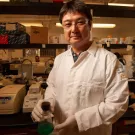
For his contributions to the development and application of atomistic and first principle simulations to understand the physical properties of materials and nanostructures, Davide Donadio was recently named a fellow of the American Physical Society.
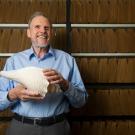
Geerat Vermeij wasn’t sure he had another book in him. The 77-year-old paleobiologist and Distinguished Professor Emeritus of Earth and Planetary Sciences already had six books and hundreds of academic publications to his name. But Vermeij, if anything, is a constant student, and writing, for him, is still one of the best ways to learn.
For her landmark work in the development and application of shock physics techniques to explain the origin and evolution of planetary systems, Stewart has been selected as an American Physical Society Fellow, a prestigious honor that no more than half of one percent of the society’s membership (excluding student members) are nominated for each year.
When it comes to the architecture of the human genome, it’s only a matter of time before harmful genes arise in a population. These mutations accumulate in the gene pool, primarily affected by a population’s size and practices like marrying within a small community. New research published in the Proceedings of the National Academy of Sciences (PNAS) journal provides rare direct evidence showing that increased homozygosity leads to negative effects on fertility in a human population.
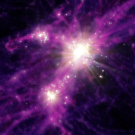
When researchers glimpsed the first images and data from the James Webb Space Telescope, humanity’s largest and most powerful space telescope, they noticed something peculiar. A large number of bright galaxies deep in the universe formed during a period called “Cosmic Dawn." New research published in The Astrophysical Journal Letters shows that a theoretical model produced roughly five years ago predicted these very observations and credits them to bursty star formation.
This week, Manuel Calderón de la Barca Sánchez returned to his alma mater in Mexico to host screenings of ‘Secrets of the Universe,’ an IMAX film that explores the formation of the universe through the eyes of Aggie researchers. Calderón de la Barca Sánchez, a UC Davis physics professor, hopes the film will inspire students to pursue STEM education and careers.
A new study published in the Proceedings of the National Academy of Sciences shows that there is an association between how songs sound and their place in our emotional lives. Sourcing songs from across the globe, Manvir Singh and his fellow researchers found that people from different types of societies can successfully identify a song’s type by how it sounds, regardless of the language of its words.