



America250: Defining citizenship and belonging as the nation celebrates its 250th birthday


Fireworks and celebrations across the country have just commemorated 250 years since the Declaration of Independence was signed in 1776.
The ways of being American since then have been as various as everyone who has built a life here. This includes the native born as well as immigrants who, throughout history, have navigated complicated questions of both belonging and legal status to preserve their own American Dream of life, liberty and the pursuit of happiness.
What does it mean to be American? Does the idea include every one of the 342.6 million people who live in the U.S. or only U.S. citizens? Is citizenship enough?
How to be American is as much a matter of citizenship as part of a broader cultural debate about identity that has raged since the nation’s founding, a debate that’s both social and deeply personal.
“Identity is really important because it influences the way we see ourselves in relation to broader social and cultural contexts,” said Dulce W. Westberg, an assistant professor of psychology at UC Davis. “It influences whether we feel we have a place in society.”
Despite 250 years of history, the question of how to be American is hardly settled — and it affects all of us, whatever version of America we are.
Being American in nation’s first century
Before the nation’s founding in 1776, there was no American identity.
“The revolution itself is a moment in which people who were Britons living in North America began to think of themselves as different and having different rights and privileges than other people who lived within the British Empire,” said Rachel St John, an associate professor of history at UC Davis.
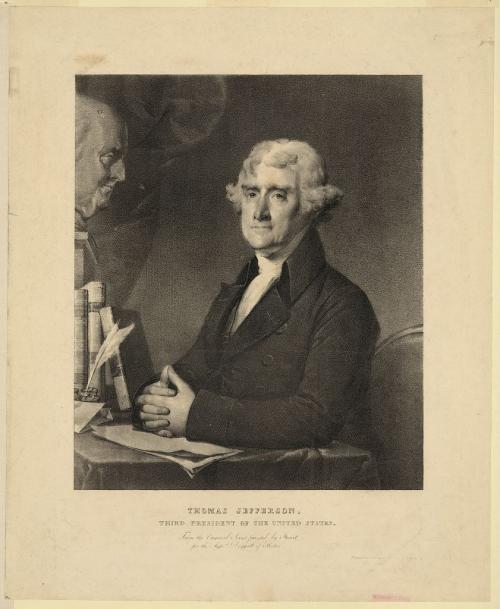
Thomas Jefferson, third U.S. president and founding father who wrote the Declaration of Independence, would envision the future of this new nation as an agrarian republic of “yeoman farmers,” or free small-scale family farmers.
“Those who labor in the earth are the chosen people of God, if ever he had a chosen people, whose breasts He has made His peculiar deposit for substantial and genuine virtue,” Jefferson wrote in 1787.
“Jefferson thought that in order to be politically independent you also had to be economically independent, and the best way to do that was to own your own land,” said St John.
St John has written extensively on American history of the 19th century. That period includes the U.S. Civil War as well as westward expansion and wars against indigenous communities that would lead to their removal from their ancestral lands.
During that period, said St John, new ideas and values about what it means to be American would emerge. Among them was an ideal of economic opportunity grounded in the land itself. The Homestead Act of 1862 encouraged westward expansion with grants of 160 acres at little cost.
In 1865, during the Civil War, Union general William T. Sherman issued an order that newly freed Black families could be settled on confiscated Confederate land in 40-acre plots so they could sustain themselves and to encourage them to join the Union army. This order is the origin of the phrase “40 acres and a mule,” which today is associated with the idea of reparations for slavery.
How to be born American
U.S. citizenship, whether by birth or naturalization, has practical consequences beyond the right to vote. It grants legal access to freely enter the U.S. after traveling abroad that non-citizens do not have. It also protects people from being removed from the country through deportation, which accelerated significantly under the current president.
The 14th Amendment codified birthright citizenship in 1868, which is citizenship received automatically by any person born within a nation’s territory. The 14th Amendment states: “All persons born or naturalized in the United States, and subject to the jurisdiction thereof, are citizens of the United States and of the State wherein they reside.”
Even before then, people did have a conception of federal citizenship as jus soli, a legal term meaning “right of the soil,” or what we call now birthright citizenship, said Raquel Aldana, a professor in the UC Davis School of Law and faculty affiliate of the Global Migration Center. It was an idea derived from British common law.
Aldana also cited the 1857 Supreme Court ruling in Dred Scott v. Sandford that enslaved people were not U.S. citizens despite being born here. The Civil Rights Act of 1866, signed into law two years before the 14th Amendment was ratified, would define federal citizenship broadly to return to jus soli, in part to overturn Dred Scott.

The definition of birthright citizenship in the 14th Amendment was affirmed in the 1898 Supreme Court case United States vs. Wong Kim Ark. Ark, who was born in San Francisco, traveled to China, then, upon returning home, was denied entry by U.S. agents citing the Chinese Exclusion Act.
On June 30, the Supreme Court rejected the current president’s legal challenge to birthright citizenship in Trump v. Barbara. Its decision held that children born in the U.S., even if their parents are here unlawfully or temporarily, are citizens at birth under the 14th Amendment.
“Citizenship, then and now,” wrote Chief Justice John Roberts, “was the right to have rights—to freely participate in our political community. The Framers of the Fourteenth Amendment extended that promise to ‘every free-born person in this land.’ We keep that promise today.”
How to become American
Right now, more than 50.2 million people living in the U.S. — 14.6% of the total population — were born elsewhere, according to the U.S. Census Bureau. Of those, roughly half are naturalized U.S. citizens.
Prior to 1882, states had considerable control over who could become an American. The Constitution itself does not assign broad immigration powers, said Aldana. Despite this, in the 1880s the Supreme Court framed immigration as a federal power that the government asserts today.
“Then it decided in those very early cases that this power, because it was inherent in sovereignty and rooted in war powers and foreign affairs, is a plenary power that is not subject to constitutional constraints in the same ways that other powers are,” said Aldana.

Immigration laws since then, which have decided who can become American, were based on race and national origin.
“For the better part of the 20th century, the right to naturalize, which is the very essence of becoming a U.S. citizen, was explicitly based on skin color,” said Brad Jones, a professor of political science at UC Davis.
U.S. laws early in the nation’s history forced people seeking to become citizens to petition the courts that they were either Black or white. A 1790 U.S. law made being a “free white person” a prerequisite for becoming a naturalized citizen. The Naturalization Act of 1870, allowed for immigrants or African nativity or descent to apply for citizenship as well.
The 1924 Indian Citizenship Act conferred citizenship on Native American people but without voting rights. Native Americans’ voting rights would not be federally protected until the 1965 Voting Rights Act.
For much of the 20th century, naturalized U.S. citizenship has also depended on where a person was born. A series of immigration laws passed by Congress from 1917 to 1952 established and amended a quota system that barred some immigrants based on their national origin. Until 1952, immigrants from countries in East, Central and Southern Europe, were largely banned, as were people from every country in Asia and Africa.
The Immigration act of 1965 eliminated discrimination in who could receive a visa but imposed the nation’s first limit on the number of people who could immigrate from countries in Latin America. This limit had the biggest impact on immigrants from Mexico.
“Overnight, literally, it created a whole new class of people that we now refer to as illegal immigrants,” said Jones, who recently co-edited a special issue on deportation for the Russell Sage Foundation Journal of the Social Sciences.
According to the Pew Research Center, half of all immigrants to the U.S. from 1965 to 2025 came from countries in Latin America, and half of those came from Mexico.
How to feel American
However, not everyone with American citizenship is treated as if they are equally American. Jones described another definition of citizenship, which is citizenship by consensus. It’s the idea that if a person doesn’t embody American cultural elements defined by the majority group, then they are not really American.
In 2011, Jones published research that found a majority of Americans viewed Latinos as being something other than American. This study began after Jones had read the book Who Are We? The Challenges to America's National Identity by Harvard political scientist Samuel Huntington. It argued that immigration from Latin American countries was a threat to American identity because people from those countries refused to learn English and adopt American customs.
“At the end of the day, it’s an empirical question,” said Jones. “Do Latino people learn English? Well, we have measures on that and the answer is yes, they do. Are Latino people patriotic? Yes. In many surveys that I've looked at they actually espouse higher levels of patriotism than native-born white people, perhaps up until very, very recently.”

Westberg, the psychologist, views identity as something shaped by both the stories society provides about who we are and the stories we tell about ourselves. When these stories define a population as large and diverse as the U.S., many people don’t fit the expected mold.
“I'm really interested in individuals from minoritized groups who might not fit that expected script or those prototypical norms of what it means to be a good person or live a good life,” she said.
Right now, she is conducting a study that asks participants directly what American identity means to them. The study includes 450 participants, all of them non-white, the majority of them Black Americans.
Participants identified common, idealistic themes related to the American Dream, like economic opportunity and freedom. They also mentioned negative aspects of American identity, including a history of oppression, inequality, racism and white supremacy.
About 11% of respondents mentioned whiteness in their definition of “American.”
But being a U.S. citizen didn’t necessarily mean feeling completely American. When asked how they felt like they were not American, many participants described feeling more aligned with a different cultural group. They talked about discrimination and feeling ashamed of aspects of U.S. culture or public policy.
“Even though they don't necessarily connect whiteness immediately when they think of what it means to be American, when they think what it means to not be American they are categorizing these things that have to do with their own racial-ethnic heritage into that bucket, which reinforces whiteness as a default,” said Westberg.
The analysis also showed that taking part in activities that participants defined as American was associated with lower levels of anxiety. These activities included celebrating July 4th or gathering to watch the Super Bowl. Participants who endorsed what they thought of as American values, including idealism and diversity also had higher well-being.
“Feeling connected to other Americans seems to be good in terms of mental health, and so does endorsing those American values like freedom and opportunity,” said Westberg.
American pride
This year’s July 4th celebrations for the nation’s 250th birthday didn’t go off without a hitch. The National Mall in Washington, D.C. was evacuated due to evening thunderstorms, delaying the fireworks display by several hours. Earlier in the day, more than 50 people were treated for heat-related illness. In New York, fires broke out on the Brooklyn Bridge.
Some decided not to celebrate July 4th at all. A June Gallup poll found pride in being American is at its lowest point since at least 2001.
Jones mentioned a video posted on TikTok in June that shows today’s cultural divisions playing out in real time. It was posted by Humane Borders, a non-profit that places permitted water stations throughout the southern Arizona deserts for migrants who need water. Jones has volunteered for Humane Borders since 2017.
The video begins in the cab of a pickup truck and a man wearing a cap with an American flag stitched into the side. In the next shots, he is moving across the desert sand and working on blue water tanks among the cacti and scrub. A plain blue flag flies high overhead behind him.
The man is a volunteer with Humane Borders, and comments on the video were overwhelmingly positive:
“Thank you sir for your hard work. I’m in Arizona and the heat is no joke.”
“People forget that we’re all humans. It’s beautiful to see humanity being respected and cherished”
“This is the america I want to live in!”
A June 8 comment had a slightly different take that took issue with the display of the American flag on the man’s hat:
“I cringed and almost scrolled when I first saw the hat. Glad I stayed.”
The video received more than 55,000 likes and nearly 2,000 comments.
“The video went viral, I think, in large part because here is someone who is espousing some degree of patriotism but also doing work that seems to be contrary to what a lot of people who fly the flag would believe is legitimate,” said Jones.
There is no more fundamental national symbol than the American flag. Yet, it has become a flashpoint for competing visions of what it means to be American that don’t make any of us any more or less American.
“Debate is nothing new in this country, and in some ways what makes us American is that we argue about these things,” said St John. “We have proved, over and over again, that this idea of ‘American’ is, and can be, capacious enough to include many different people.”
YOU MAY ALSO LIKE THESE STORIES

What Was the American Dream?
The American Dream as both idea and ideal, for all its complications, has had an undeniably powerful role in shaping values and aspirations in the U.S. and far beyond its borders. Faculty and students in the College of Letters and Science share American society’s past, present and continuing potential.

A Brief History of Citizenship in the 14th Amendment to the U.S. Constitution
Historian Gregory Downs explains the complicated history of the 14th Amendment to the Constitution, including subsequent laws that undermined equal protections it guaranteed, as well as the court case affirming the definition of birthright citizenship we take for granted today.