




Welcome to Books of the Month, where once a month we select books authors within the College of Letters and Science at UC Davis. This month, we’re thinking about how internet culture, video games and the rise of artificial intelligence, or AI, are reshaping our world.
From the way we write to the way we socialize and even the way we think, we are greatly influenced by our changing technologies. To help us understand our current moment, we look at books by scholars from Science and Technology Studies, the Department of Cinema and Digital Media, the Department of English and the University Writing Program.

Swarms, Viral Writing and the Local
Carl Whithaus (University Writing Program)
Swarms, Viral Writing, and the Local (University of Pittsburgh Press, 2025) examines the social and rhetorical dynamics around emerging writing technologies. Carl Whithaus argues that these dynamics work across networked publics as patterns of behavior and ways of interacting through and with multimodal texts. This rhetorical analysis of the production and reception of born-digital rhetoric shows the ongoing and evolving impacts of online public discourse that can lead to bad restaurant reviews or the subversion of democracy.

Digital Uncanny
Kriss Ravetto-Biagioli (Department of Cinema and Digital Media)
Digital Uncanny (Oxford University Press, 2019), by Kriss Ravetto-Biagioli, professor of cinema and digital media, looks at a new kind of uncanny experience — how surveillance technologies, algorithms, feedback and data flows anticipate human gestures, emotions, actions and interactions.

Metagaming: Playing, Competing, Spectating, Cheating, Trading, Making, and Breaking Videogames
Stephanie Boluk, Patrick LeMieux (Department of Cinema and Digital Media)
Metagaming: Playing, Competing, Spectating, Cheating, Trading, Making, and Breaking Videogames (University of Minnesota Press, 2017) delves into alternative histories of play and demonstrates how games extend beyond the screen, and how modders, mappers, streamers, spectators, analysts, and artists are changing the way we play.

Respawn: Games, Hackers and Technogenic Life
Colin Milburn (Department of English)
In Respawn: Gamers, Hackers, and Technogenic Life (Duke University Press, 2018), Colin Milburn examines the connections between video games, hacking and science fiction that galvanize technological activism and technological communities. Discussing a wide range of games, from Portal and Final Fantasy VII to Super Mario Sunshine and Shadow of the Colossus, Milburn illustrates how they impact the lives of gamers and non-gamers alike.
Experimenting with Shakespeare
Gina Bloom, Evan Buswell, Colin Milburn and Nick Toothman (Department of English, Department of Cultural Studies)
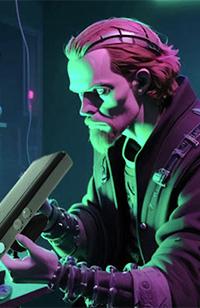
Experimenting with Shakespeare contends that play is a method of knowledge-making and that Shakespearean theater can be a generative model for laboratory life. The book reflects on the history of the ModLab at UC Davis, an experimental media space bringing together computer scientists, historians of science, theorists of performance, literary scholars and media designers.

Everyone Breaks These Laws: How Copyrights Made the Online World
Gerardo Con Díaz (Department of Science and Technology Studies)
In Everyone Breaks These Laws: How Copyrights Made the Online World (Yale University Press, 2025), Gerardo Con Díaz examines the strange world of online copyrights from the 1990s to today’s AI-driven era, showing how our ability to immerse ourselves in digital media depends on the erosion of what it means for people to own their creative works, online and offline. He delves into the often overlooked impact of digital ownership on privacy and self-expression in this fascinating field guide to the complex landscape of online rights.
YOU MAY ALSO LIKE THESE STORIES
What Does It Mean to Own Something?
As an associate professor in the Department of Science and Technology Studies at UC Davis, Gerardo Con Diaz investigates how law and policy shape the digital world.

UC Davis Alumni Launch Geology Coding Bootcamp
Geology provides a language for understanding the Earth. Stories from the planet’s past are locked in the rocks and landscape. But others are hard to reveal, hidden in troves of data. Alums Barbara Wotham and Chad Trexler launched a Geology Coding Bootcamp program to help students uncover those stories.