A new review paper from the Center for Mind and Brain suggests that a person’s environment in early childhood has much more to do with how they engage executive function — like exerting self-control — throughout their lives than innate ability.
New research from the University of California, Davis, has found that toddlers who tend to look more closely at and compare paired images during a memory task are more aware of the accuracy of their own memories a year later. This finding connects the earliest process of seeking information with the developing ability to judge the accuracy of memories.
A UC Davis research team systematically analyzed 40 empirical studies, the majority of which had found that outdoor air pollution is associated with differences in children’s brains. These differences include volumes of white matter, which is associated with cognitive function, connections throughout the brain and even early markers for Alzheimer’s.
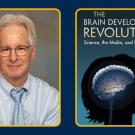
Psychologist Ross Thompson’s new book, “The Brain Development Revolution: Science, the
Media, and Public Policy” tells the story of the 1997 “I Am Your Child” campaign with an
incisive analysis spanning how the campaign captured everyone’s attention, the backlash from
scientists and the continuing reverberations today.