“Folklore and Fairytales: the Literary Words of Taylor Swift” is a one-unit first-year seminar that treats Swift’s songwriting as a serious object of literary study, incorporating readings, discussions, creative analysis, and, of course, listening sessions. The course is open to all undergraduates, with preference given to first-years, and is offered through the Office of Undergraduate Education.
A new study in communication examined how the data-driven business models of TikTok and Spotify shape both the music artists make, and the songs people choose.
Composer, performer and installation artist Raven Chacon, the winter quarter spotlight artist in The California Studio: Manetti Shrem Artist Residencies, will be giving a talk at UC Davis in February. Students will also be performing one of his pieces. Both events are free and open to the public.
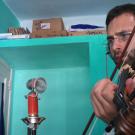
Assistant Professor of Spanish and Portuguese Charlie Hankin spent years studying rap music and community in Brazil, Cuba and Haiti. That research culminated into the award-winning book, "Break and Flow: Hip Hop Poetics in the Americas." He also became an unlikely collaborator with some local musicians he was working with.
Music has played a pivotal role in Jason Chen's experience at UC Davis. An undergraduate physics major, Chen has been a member of the UC Davis Concert Band since his freshman year. During that time, he's composed multiple symphonic pieces that have been premiered at UC Davis. Another piece will make its debut at the May 21 spring concert at the Mondavi Center.
A local musician with big dreams captured the hearts of millions around the world and landed a record deal after a video of their iconic UC Davis commencement walk went viral.
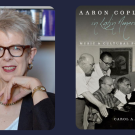
So, what’s the U.S. State Department doing in the music business? Actually, the State Department has a long music diplomacy history, and an expert on this is Carol A. Hess, a musicologist and Distinguished Professor of Music in the College of Letters and Science at UC Davis.
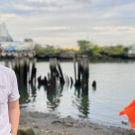
An estimated 30 million gallons of oil is one of many toxins in Newtown Creek, which borders Queens and Brooklyn in New York City. This unlikely place has not only inspired an opera, but it will also be the venue for it. "Newtown Odyssey," by UC Davis professor Kurt Rohde, visual artist Marie Lorenz and writer Dana Spiotta, will premiere soon.
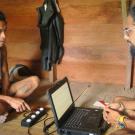
A new study published in the Proceedings of the National Academy of Sciences shows that there is an association between how songs sound and their place in our emotional lives. Sourcing songs from across the globe, Manvir Singh and his fellow researchers found that people from different types of societies can successfully identify a song’s type by how it sounds, regardless of the language of its words.