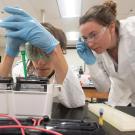
The National Science Foundation has just awarded a $174,000 research grant to psychologist Emorie Beck to study procrastination among students in the STEM fields. The study is part of a four-university collaboration that will develop new tools that can benefit all students.
The Vera C. Rubin Observatory recently launched its 10-year astronomical survey to create the most comprehensive, cinematic record of the universe. While thousands of people played a part in making the facility a reality, Tony Tyson played a formative role, acting initially as the facility’s founding director and now its chief scientist. We sat down with Tyson to discuss his background and the technology behind the Rubin Observatory’s revolutionary camera.
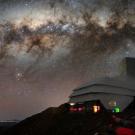
From a mountaintop in Chile, under clear dark skies, NSF–DOE Vera C. Rubin Observatory has begun the revolutionary Legacy Survey of Space and Time (LSST). The ten-year survey is Rubin’s signature campaign to create the most comprehensive, cinematic record of the Universe in history.
Sameer Iyer, an associate professor of mathematics at the College of Letters and Science at UC Davis, recently received a $400,000 grant from the National Science Foundation’s Faculty Early Career Development Program to advance his theoretical work on two enigmatic aspects of the Navier-Stokes equations: the boundary layer between an object and a fluid, and the large time dynamics of a fluid’s flow.
Two projects at the University of California, Davis, that use artificial intelligence to design and engineer proteins for industrial and health applications have been funded by the U.S. National Science Foundation. The grants are part of a $32 million investment in AI and protein engineering by the NSF Directorate for Technology, Innovation and Partnerships.
Mathematics permeates our lives. It’s there even when it escapes our comprehension. Anne Schilling discusses the predictive power of mathematics and her research on “Markov chains,” which are probability models that describe the sequence of events/states based on the past. It’s a concept that can be applied to a lot more than just your dresser drawer, including weather, voting procedures and quantum physics.
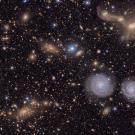
The results of two decades of scientific and technological innovation were unveiled today with the reveal of the first imagery captured by the Vera C. Rubin Observatory, a facility jointly funded by the National Science Foundation and the U.S. Department of Energy's Office of Science.
UC Davis is a powerhouse for breakthroughs and impact. Our interdisciplinary research plays a vital role in building the region’s economy. Our L&S researchers describe the impact of their work, and the consequences if federal support for this cutting-edge research were reduced or eliminated.
A UC Davis researcher exploring the possibilities of quantum chemistry was recently awarded a five-year, $660,000 grant from the National Science Foundation’s Faculty Early Career Development Program (CAREER).
Coming online in 2025, the NSF-DOE Vera C. Rubin Observatory's enormous, unrelenting eye on the sky will create the biggest, most data-rich movie ever made — a 10-year, high-precision chronicle of trillions of cosmic events and objects across space and time.