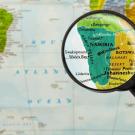
In a study appearing in Science Advances, researchers analyzed genetic samples from individuals who self-identified as South African Colored, a term denoting mixed ancestry. The researchers found that modern populations of this group in the Western and Northern Cape provinces retain majority Khoe-San genetic ancestry, exceeding 48%.
At the April Davis Science Café, environmental toxicologist Andrew Whitehead explored not only how our actions as a species affect ourselves, but also how they impact the innumerable species we share the Earth with.
When it comes to the architecture of the human genome, it’s only a matter of time before harmful genes arise in a population. These mutations accumulate in the gene pool, primarily affected by a population’s size and practices like marrying within a small community. New research published in the Proceedings of the National Academy of Sciences (PNAS) journal provides rare direct evidence showing that increased homozygosity leads to negative effects on fertility in a human population.