


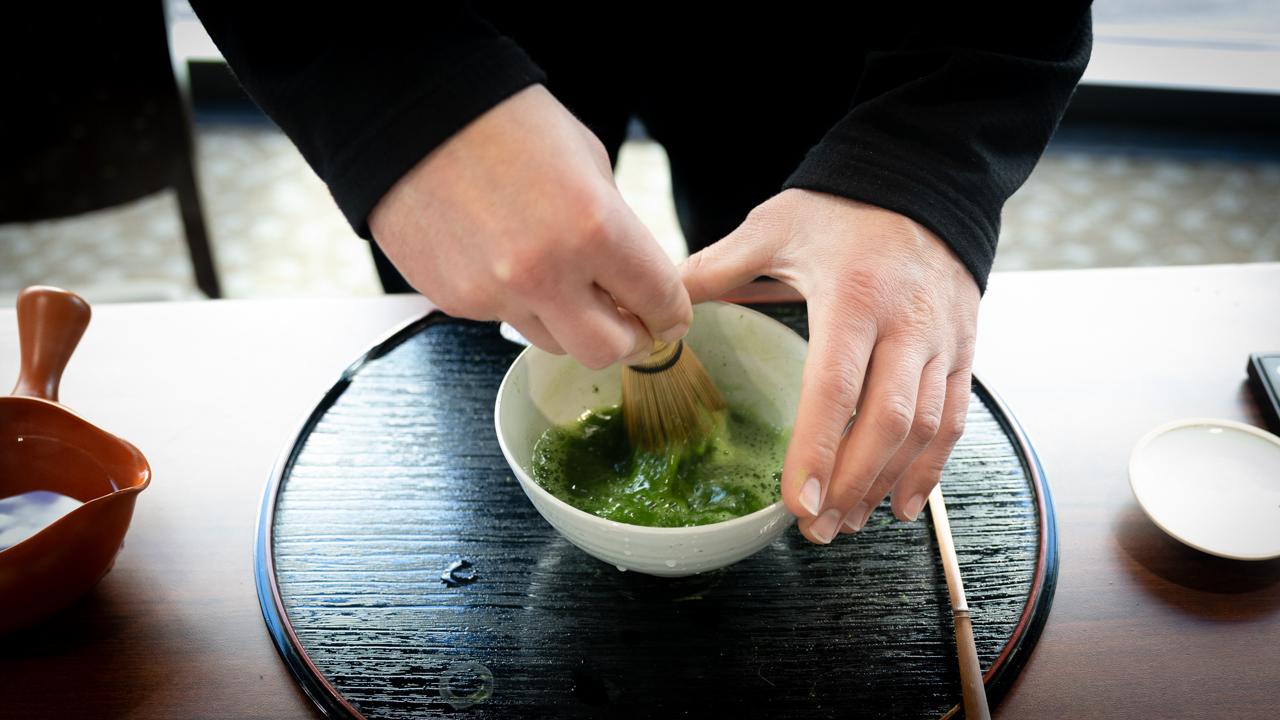


Whether it’s a warm cup of oolong in the winter or an iced matcha in the summer, there are numerous ways to enjoy tea all year long. It can be taken on-the-go or part of a slow, mid-morning ritual. It can be enjoyed privately or served ceremoniously to a dignitary or group of friends.
Tea is one of the most widely consumed beverages and has been for centuries. All over the world, it’s been not only a staple item in human diets, but it’s been at the center of diplomatic negotiations, rebellions and national economies.
This year’s annual Global Tea Institute Colloquium honors the legacy of tea with its theme: Art of Tea in Culture and Science, Society and Health. It will be held Thursday, Jan. 29, at the UC Davis Conference Center. The event is free and open to the public.
The 11th annual colloquium will be complemented by an exhibit in the Archives and Special Collections Reading Room at Shields Library, on display through the winter quarter. It will feature a selection of objects from GTI’s Collection of Art and Material Culture.
Exploring tea through culture, science, society and health
For the first time in its history, all the scholars speaking at the colloquium are affiliated with UC Davis, including Katharine Burnett, director of the Global Tea Institute (GTI) and professor of art history in the College of Letters and Science.

Burnett will present her research at the colloquium for the first time. Her talk, “The Marvelously Extraordinary, Inventively Original Late Ming Teapot,” will be a culmination of her research on this topic spanning more than a decade.
Her curiosity about changes made to teapots in the late Ming Era eventually led her to found what is now known as the GTI. Her work, along with research from others passionate about tea studies, have helped make UC Davis a hub for tea research.
“Finally, this is the stuff that I had been talking about that ultimately inspired all of what happened with GTI,” Burnett said. “And, so, I'm very excited to, at long last, share this research.”
Read more about the origins of GTI in Letters and Science Magazine.
Other presenting scholars are also GTI members. They include Professor Jean-Xavier Guinard, a sensory scientist and consumer researcher based in the Department of Food Science and Technology; Thiago Braga, a Ph.D. candidate in anthropology who studies tea culture; and Sze-Wai Alex Ng, a research associate and visiting scholar in the Department of Art and Art History.
Tea ritual: a tool for mindfulness, connection and conversation
Part of the art of tea includes the ritual of tea, so, of course, that ritual must be honored at the colloquium. Bringing along his own tea wares, Erik Fausak, health sciences librarian and tea advisory board member with GTI, will give students a quick lesson in Gong Fu Cha, the traditional way to brew Chinese tea.
“It's a really nice ritual style — it's mindful way to serve tea but, not only that, it's supposed to make the best tea,” Fausak said. “And it really does, in my opinion, make a better cup of tea.”
During the colloquium’s two-hour lunch break, Fausak and his student assistants will set up and serve tea while giving guests the opportunity to witness the ritual, engage in conversation and network.
Fausak leads “Mindfulness Tea Meditation” every Tuesday morning via Zoom during the academic year. The 15-minute meditation only requires guests bring hot water, tea and a bowl or tea set.
“It's just about a kind of self-care and, in a busy schedule, these team meditations don't have to take more than five minutes,” he said.
The link to his series as well as instructions on how to prepare a tea meditation can be found here.
YOU MAY ALSO LIKE THESE STORIES

What is Diwali? California's Newest Holiday Explained
Hinduism’s Diwali, or “Festival of Lights,” is California’s newest state holiday. Scholars from the Department of Religion, Culture and Society in the College of Letters and Science at UC Davis explain its significance.

Department of Religion, Culture and Society Announces New Master’s Program at UC Davis
The Department of Religion, Culture and Society in the College of Letters and Science at UC Davis is now accepting graduate applications for the 2026-2027 academic year. The admitted scholars will be the first cohort in the newly announced master’s program.