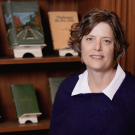
Jacob Hibel, professor of sociology in the College of Letters and Science at UC Davis, has just received a $1.69 million grant from the U.S. Department of Education to study how special education across Oregon public schools affect lifelong outcomes for students with disabilities.
Recently, the UC Davis Center for Poverty and Inequality Research convened a crosssector conference to examine the current impacts of AI in our lives — and how researchers, policymakers and industry leaders can respond.
UC Davis undergraduate students have been contributing to economics research on whether the Women, Infants and Children, or WIC, program, a U.S. safety net program, improves children’s test scores.
The U.S. poverty rate puts a number on the share of households who struggle to make ends meet. The way we measure poverty dates back to the 1960s and provides a starting point for building an effective safety net that lifts people out of poverty.
Cuts to the federal food assistance program SNAP were part of a $1.1 trillion overall cut in the federal budget bill signed into law this summer. The bill’s overall changes to SNAP, including a requirement that some states pay a share of benefit costs for the first time, could lead to more families going hungry.
The American Dream as both idea and ideal, for all its complications, has had an undeniably powerful role in shaping values and aspirations in the U.S. and far beyond its borders. We spoke with faculty and students in the College of Letters and Science at UC Davis who represent a wealth of knowledge and perspectives that help us think about American society’s past, present and continuing potential.
Marianne Page, a professor of economics, co-founded the UC Davis Center for Poverty and Inequality Research in 2010. Today, the center creates a wealth of research and outreach opportunities for its network of faculty affiliates and graduate students across the social sciences at UC Davis and beyond.
The UC Davis Center for Poverty and Inequality Research is launching a new study funded by a grant from the Urban Institute that investigates what services and support can help students with disabilities succeed in school and ultimately be more successful as adults.
Increasing diversity among faculty in higher education has become a major priority within the University of California. A summer program led by the Center for Poverty and Inequality Research hosted CSU undergraduates from across the state to help clear a pathway for them to pursue advanced degrees.