The UC Davis Department of Communication rose to #13 among its peers globally in 2024, ranking 11 spots higher than just a year ago. This year’s rankings, released in November, recognize UC Davis faculty’s outsized impact compared to much larger departments.
New research identified 10 key features of clickbait journalism on social media and compared its use between digital-native news media and legacy news media outlets. The study confirmed that digital-native media outlets are much more likely to use clickbait, and that it really does drive engagement in the form of likes and reposts, but may accelerate a decline in media trust.
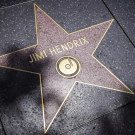
The so-called 27 Club has captivated the public imagination for half a century. Its members include legendary musicians Jimi Hendrix, Janis Joplin, Jim Morrison, Kurt Cobain and Amy Winehouse. This article in The Conversation explores why the 27 Club persists in culture.
UC Davis Undergraduate Education recently named Associate Professor of Teaching Jeanette B. Ruiz to lead its First-Generation Initiative into its next phase that expands program support to include first-generation faculty.
Social scientists across Letters and Science are studying AI to answer questions about people and society and to develop technologies that may drive our future. This work touches nearly every part of daily life, from health to education to the way we communicate with each other. Their work shows that at this point in history, AI and human society are inextricably intertwined.
The Office of Public Scholarship and Engagement has unveiled its fifth class of Public Scholarship Faculty Fellows. Check out the L&S faculty members who made the list!
UC Davis experts Martin Hilbert and Marit MacArthur from the UC Davis College of Letters and Science answer important questions about advancements in artificial intelligence at a recent Team Research Forum.
This year, the Fulbright Program named two College of Letters and Science faculty as scholars who will advance their research with international colleagues. Fulbright US Scholar Awards, which are administered through the U.S. Department of State, are among the most prestigious international awards.
A UC Davis research team in the Department of Communication is studying how children learn in a virtual reality environment. They recently opened this research to public participation at the Museum of Science and Curiosity, or MOSAC, in Sacramento, where undergraduate research assistants played a key role in making this research possible.