The National Endowment for the Humanities awarded a $500,000 grant to launch and fund the UC Davis Center for Artificial Intelligence and Experimental Futures (CAIEF). CAIEF will promote the democratic governance of AI systems by engaging diverse stakeholders in processes of creative worldmaking — crafting the world of tomorrow, together.
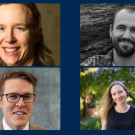
Four faculty members have received the 2023 College of Letters and Science Teaching Awards. The awards recognize outstanding teaching on the undergraduate and graduate levels, both inside and outside the classroom.
High Desert is an ode to the American Southwest, exploring such key events as the First Red Scare, the Tulsa Race Massacre and the West Coast’s wildfire epidemic.
Flitting from the mud-soaked floors of Venice to the glittering, towering constructions of the Abu Dhabi of his childhood and early adulthood, from present-day London to North America, André Naffis-Sahely's bracingly plain-spoken first collection gathers portraits of promised lands and those who go in search of them: laborers, travelers, dreamers; the hopeful and the dispossessed.
The right-to-die debate has gone on for centuries, playing out most recently as a spectacle of protest surrounding figures such as Terry Schiavo. Focusing on the concepts of human dignity and the sanctity of life, Scott Cutler Shershow employs Derridean deconstruction to uncover self-contradictory and damaging assumptions that underlie both sides of the debate.
Drawing on under-studied periodicals and archives, this book uncovers a largely forgotten literary-political context. It looks at the extensive debate within the radical press over how to situate radical values within an evolving media ecology, debates that engaged some of the most famous writers of the era (William Morris and George Bernard Shaw), a host of lesser-known figures (theosophical socialist and birth control reformer Annie Besant, gay rights pioneer Edward Carpenter, and proto-modernist editor Alfred Orage), and countless anonymous others.