George R. Mangun, distinguished professor emeritus of psychology, has been named a Royal Society Wolfson Fellow in recognition of his body of research advancing the fields of psychology and neuroscience.
UC Davis psychologist Paul Hastings has been appointed interim director of the Center for Mind and Brain, a UC Davis research institute that studies how the human mind works and trains the next generation of researchers with leading-edge techniques and methods in psychology and neuroscience.
George “Ron” Mangun and Tamara Swaab are joining the University of Birmingham in the U.K. on the faculty of the School of Psychology and the Centre for Human Brain Health after careers spent making UC Davis a global leader in the fields of psychology and neuroscience.
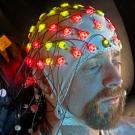
UC Davis researchers combined electroencephalogram, or EEG, data with eye tracking and machine learning to study “anticipatory attention,” which is attention that enables a person to prepare to perceive upcoming sensory events. They employed this method to learn how our brain processes incoming information.
An interdisciplinary research collaboration between the California Lighting Technology Center, or CLTC, and the Center for Mind and Brain, or CMB, The Color Lab is part of an effort to implement human-centric lighting designs to optimize well-being.
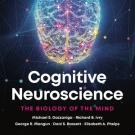
by George R. Mangun, Michael S. Gazzaniga, Richard B. Ivry, Dani S. Bassett, Elizabeth A. Phelps
Cognitive Neuroscience is universally recognized as the gold-standard text for undergraduate students. For the Sixth Edition, the authors, led by Michael Gazzaniga, are proud to welcome star neuroscientists Elizabeth Phelps and Dani Bassett to the author team. Phelps and Bassett are widely viewed as two of the most accomplished neuroscientists working today, and together they bring cutting-edge research and a modern perspective to this highly esteemed text.
Ron Mangun, Distinguished Professor of psychology and neurology and co-director of the Center for Mind and Brain at UC Davis, has just been awarded the 2024 Award for Education in Neuroscience by the Society for Neuroscience for his contributions to neuroscience education and training.
This year, the Fulbright Program named two College of Letters and Science faculty as scholars who will advance their research with international colleagues. Fulbright US Scholar Awards, which are administered through the U.S. Department of State, are among the most prestigious international awards.
Funded by a three-year $900,000 grant from the National Science Foundation, Distinguished Professor George R. Mangun, director of the UC Davis Center for Mind and Brain, is launching a project to better understand the cognitive mechanisms behind realistic voluntary attention, or attention directed by an individual’s free will. The project will be conducted in collaboration with engineering colleagues at the University of Florida.