The University of California Humanities Research Institute (UCHRI) has recently funded two projects led by faculty in the UC Davis College of Letters and Science that document the lives of marginalized people, both in the past and present.
The National Endowment for the Humanities awarded a $500,000 grant to launch and fund the UC Davis Center for Artificial Intelligence and Experimental Futures (CAIEF). CAIEF will promote the democratic governance of AI systems by engaging diverse stakeholders in processes of creative worldmaking — crafting the world of tomorrow, together.
Professor Inna Vishik joins 18 other researchers from across the nation who will each receive a five-year, $1.25 million grant to pursue new research goals and explore uncharted, innovative ideas.
Alejandra Ruiz, M.F.A. ’23, is using mushrooms to turn fast-fashion waste into reusable, eco-friendly materials. Ruiz is focused on addressing critical issues in fashion and textile culture, envisioning a sustainable and responsible future for the clothing production industry. In her role as a teaching assistant at UC Davis, Ruiz advocates for sustainability through education
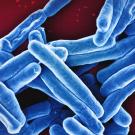
In a study appearing in PLOS Global Public Health, UC Davis researchers investigated the epidemiological risk factors, outside of HIV, associated with TB in South Africa’s Northern Cape Province.
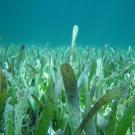
At the most recent Davis Science Café, Professor Tessa Hill, Department of Earth and Planetary Sciences, discussed the rapid changes occurring in the oceans due to human-induced climate change. But a potential solution may reside in the disappearing seagrass beds hugging the California coastline.
As society reckons with the fallout from this atmospheric chemical change, University of California researchers are seeking solutions to not only mitigate emissions but to harness carbon dioxide waste.
In his most recent book, Professor Hsuan Hsu explores the origin of air conditioning and U.S. dependence on the technology, as well as the consequences of it on the environment, public health and society. He also grapples with when and how air conditioning becomes a need — or even a human right — and when it is a luxury.
A $1.6 million Climate Action Seed Grant is funding a project to survey the landscape and plan climate resilience projects on Indian allotment lands. The UC Davis-led project will utilize landscape surveys, climate modeling, and the expertise of allottees to understand what is on their land and how it has changed over the past 20 years.