Mathematicians are challenging the idea that dark energy is responsible for the accelerating expansion of the universe. In a new paper published in Proceedings of the Royal Society A, mathematicians from the University of California, Davis, provide mathematical proof that instabilities inherent in the Einstein-Euler equations imply that the current model of the expanding universe is not viable.
Nobel Laureate Adam Riess recently visited the UC Davis campus to tell the story of the surprising expansion history of the universe. It’s a story Riess played a pivotal role in revealing. In 2011, he was one of three scientists awarded the Nobel Prize in Physics “for the discovery of the accelerating expansion of the universe through observations of distant supernovae.”
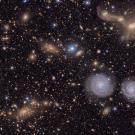
The results of two decades of scientific and technological innovation were unveiled today with the reveal of the first imagery captured by the Vera C. Rubin Observatory, a facility jointly funded by the National Science Foundation and the U.S. Department of Energy's Office of Science.
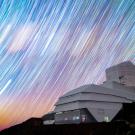
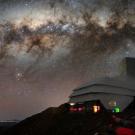
Tony Tyson, a Distinguished Research Professor in the Department of Physics and Astronomy, recounts the origin of the Rubin Observatory and his decades-long journey to make the facility a reality.
Coming online in 2025, the NSF-DOE Vera C. Rubin Observatory's enormous, unrelenting eye on the sky will create the biggest, most data-rich movie ever made — a 10-year, high-precision chronicle of trillions of cosmic events and objects across space and time.