The Blavatnik Family Foundation and The New York Academy of Sciences today named 18 finalists for the 2026 Blavatnik National Awards for Young Scientists. The awards recognize scientific advances made by researchers in the United States across the following disciplines: life sciences, chemical sciences, and physical sciences & engineering.
University of California, Davis, researchers have stripped down LSD to the base features responsible for its hallucinogenic and therapeutic effects. In a new study, the researchers whittled away at LSD’s core multi-ring structure and synthesized new, simplified versions of it to probe its functionality.
David E. Olson, a professor of chemistry, and biochemistry and molecular medicine at the University of California, Davis, was recently appointed editor-in-chief of ACS Chemical Neuroscience, a transdisciplinary publication of the American Chemical Society that focuses on the use of chemical and molecular tools for understanding the nervous system and identifying new neurotherapeutics.
In a first-of-its-kind study appearing in Nature Communications, an interdisciplinary team from the university’s Institute for Psychedelics and Neurotherapeutics (IPN) dosed mouse mothers with psilocybin and found that the drug amplified anxiety and depressive-like symptoms associated with perinatal mood disorders — mental health conditions that can arise during or after pregnancy.
UC Davis Health Ventures, part of the Innovation and Economic Development Office (IEDO) at the University of California, Davis, today announced the first investment from its Investing in the Future of Medicine (IFM) Fund, backing Delix Therapeutics.
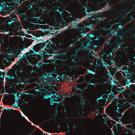
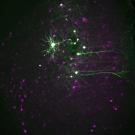
In new research led by the University of California, Davis, researchers found that non-hallucinogenic versions of psychedelic drugs promote neuroplasticity through the same biochemical pathway as psychedelics. However, unlike psychedelics, they don’t activate genes long thought to be key players in that process.
University of California, Davis, researchers have developed a new, neuroplasticity-promoting drug closely related to LSD that harnesses the psychedelic’s therapeutic power with reduced hallucinogenic potential. The research highlights the new drug’s potential as a treatment option for conditions like schizophrenia, where psychedelics are not prescribed for safety reasons.
In a study appearing in Nature Chemistry, researchers at the University of California, Davis Institute for Psychedelics and Neurotherapeutics (IPN) report the successful total synthesis of ibogaine, ibogaine analogues and related compounds from pyridine — a relatively inexpensive and widely available chemical.
New research shows that the anti-anxiety and hallucinogenic-like effects of a psychedelic drug work through different neural circuits. The study, in a mouse model, shows that it could be possible to separate treatment from hallucinations when developing new drugs based on psychedelics.
Our bodies are pharmaceutical factories, but did you know that our bodies also naturally produce psychedelics? Why do we make them? How do they work? What are their functions? And can we leverage them to mitigate neurodegenerative and neuropsychiatric conditions? The UC Davis Institute for Psychedelics and Neurotherapeutics is exploring those questions.