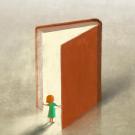
The ways of being American since then have been as various as everyone who has built a life here. Learn about the legal and cultural definitions of what it means to be American in the year the nation celebrates its 250th birthday.
Seven early career faculty members at UC Davis are being recognized with awards from the university and the UC Office of the President that highlight their research and creative exploration.
Recently, the UC Davis Center for Poverty and Inequality Research convened a crosssector conference to examine the current impacts of AI in our lives — and how researchers, policymakers and industry leaders can respond.
It’s been 40 years since the first demonstration of high-temperature superconductivity. A new article published in Nature written by UC Davis physicists Inna Vishik and Warren Pickett takes a retrospective look at “this strange state of matter.”
Renowned performance artist Cassils has been appointed to the Maria Manetti Shrem Endowed Chair in the Maria Manetti Shrem Art Studio Program at the University of California, Davis. Cassils is a Canadian transgender artist who makes their own body the material and protagonist of powerful performances that examine the histories of LGBTQI+ violence, representation and struggle while illuminating narratives of resilience and empowerment.
It’s been said that eyes are a window to the soul, but new research has found that an adolescent’s brain response to a face might open a window to their social future. The UC Davis Center for Mind and Brain found that high activity It’s been said that eyes are a window to the soul, but new research has found that an adolescent’s brain response to a face might open a window to their social future.
Melting and breaking icebergs in the far-off, northeastern region of the Pacific Ocean can weaken a massive current system in the Atlantic Ocean, according to a University of California, Davis study published in Nature Communications.
Goabaone Jaqueline Ramatlapeng vividly remembers when she would go without water from domestic pipes for days. For the last eight years, those experiences have driven her desire to help Botswana preserve its water resources as the country's first female hydrogeochemist.
With support from a UCOP Early Career Faculty Research Excellence Award, sociologist Tina Law is constructing and analyzing a database of more than 50,000 YouTube videos to learn how they contribute to the general public’s understanding of AI and the potential for broader oversight.
Welcome to Books of the Month: The list kicks off with a newly published collection by Zinzi Clemmons, associate professor of English and director of creative writing at UC Davis. "Freedom: Essays" was published on June 9, 2026, just a month ahead of the 250th birthday of the U.S.