Greg Watry
Bio

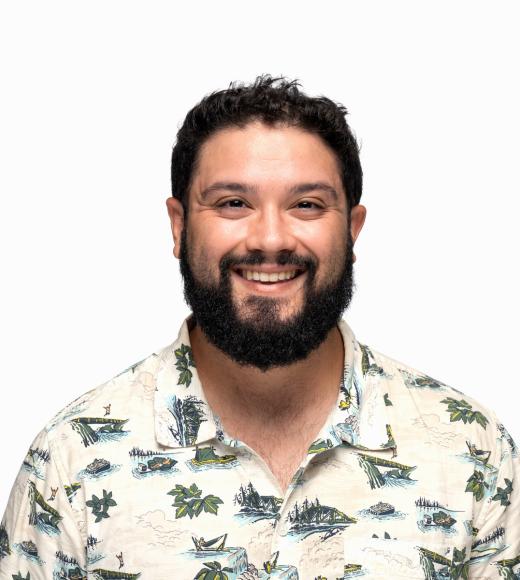
Greg Watry  

Editorial Director; Department Editor, Science & Technology

Greg Watry writes about people, research and initiatives in the mathematical and physical sciences, and is a member of the college’s communications and marketing team, serving as the team's editorial director. In addition to writing and editing, Watry serves as the lead on the college's monthly research and magazine newsletters, and the quarterly alumni newsletter. He also enjoys taking photos and working on video projects.  

Watry's career includes experience in journalism, higher education and the private sector. His work has earned awards from the New Jersey Press Association, the Association for Communication Excellence and the Council for the Advancement and Support of Education. He holds bachelor's degrees in English literature and communication (media production specialization) from Villanova University and a master's degree in science, environment and medicine writing from Columbia University.  
Did Dinosaurs Use Their Forelimbs for Social Signaling?

In December 2025, Russian scientists published an analysis of a 67-million-year-old dinosaur fossil that was found in the Gobi Desert in 1979. The researchers examining Manipulonyx reshetovi suggested that the species specialized in egg eating, using its stubby digits and long claws to grasp and puncture eggs. A UC Davis researcher is questioning that narrative.

Evolution of New Physical Traits in Mollusks Has Declined and Grown More Predictable Over Time

In a new paper appearing in the Proceedings of the National Academy of Sciences, Vermeij and his research colleague Tracy Thomson catalogued the features of various mollusks in the fossil record and found that early mollusks evolved a unique physical trait once every 2 million years. That frequency began declining roughly 444 million years ago to about one new feature every 9 million years. 

UC Davis Alumni Launch Geology Coding Bootcamp

Geology provides a language for understanding the Earth. Stories from the planet’s past are locked in the rocks and landscape. But others are hard to reveal, hidden in troves of data. Alums Barbara Wotham and Chad Trexler launched a Geology Coding Bootcamp program to help students uncover those stories.

Can You Die From a Broken Heart?

At the February Davis Science Café, an event hosted by Professor Jared Shaw and the Department of Chemistry, Crystal Ripplinger explored the compounding effects of emotional stress on the heart and explained the science behind broken heart syndrome. 

How Did the Milky Way Galaxy Form?

At the February 2026 Astronomy on Tap event at Sudwerk Brewing Co., Andrew Wetzel used supercomputer simulations to take the audience through the 13.8-billion-year history of the Milky Way galaxy.

Chemists Provide New Evidence of Two Supercooled Liquid Water States

In a recent study appearing in Proceedings of the National Academy of Sciences, University of California, Davis and Lawrence Livermore National Laboratory (LLNL) researchers use computational modeling to investigate a hypothesized state of supercooled liquid water. The research provides evidence for two supercooled liquid water states.

The Science of Fatherhood

In her book Father Time, Sarah Blaffer Hrdy explores the role males play in parental care and its evolutionary basis. Now, the book has inspired a 52-minute documentary called Father Time: Why Men Are Born to Nurture.

The Molecular Architects

Annaliese Franz and her lab are designing therapeutic molecules of the future. Through organic synthesis and catalysis, the team is building and improving molecules with therapeutic potential. Some current projects include developing a new nanoparticle technology for livestock vaccines and improving treatments for neurodegenerative disorders like epilepsy.