


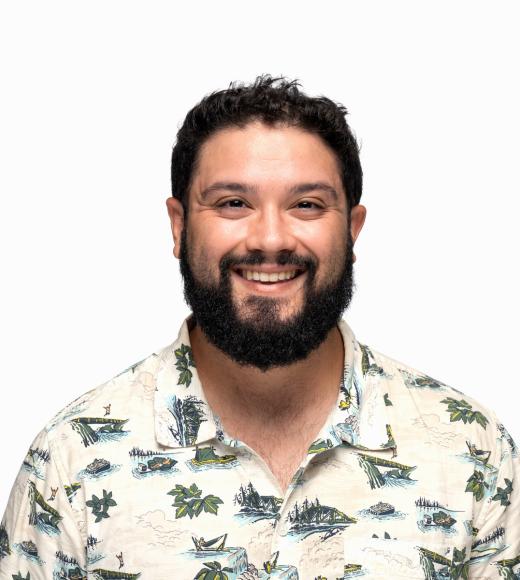
Greg Watry
Bio

Greg Watry  

Editorial Director; Department Editor, Science & Technology

Greg Watry writes about people, research and initiatives in the mathematical and physical sciences, and is a member of the college’s communications and marketing team, serving as the team's editorial director. In addition to writing and editing, Watry serves as the lead on the college's monthly research and magazine newsletters, and the quarterly alumni newsletter. He also enjoys taking photos and working on video projects.  

Watry's career includes experience in journalism, higher education and the private sector. His work has earned awards from the New Jersey Press Association, the Association for Communication Excellence and the Council for the Advancement and Support of Education. He holds bachelor's degrees in English literature and communication (media production specialization) from Villanova University and a master's degree in science, environment and medicine writing from Columbia University.  

The Molecular Architects

Annaliese Franz and her lab are designing therapeutic molecules of the future. Through organic synthesis and catalysis, the team is building and improving molecules with therapeutic potential. Some current projects include developing a new nanoparticle technology for livestock vaccines and improving treatments for neurodegenerative disorders like epilepsy. 

Walk Through California’s Geological Past at the UC Davis Rock Garden

Tucked beside the Earth and Physical Sciences Building, the California Rock Garden is one of UC Davis’ most unique outdoor classrooms. With more than 50 boulders and core samples on display, the garden tells stories of ancient oceans, erupting volcanoes, and shifting landscapes. Take a walk with us as we explore five featured specimens that stand out both in beauty and scientific significance.

Experience Required — No Matter How Weird

Why do beliefs in pseudoscience, supernatural entities and conspiracy theories thrive even when they seem implausible or lack evidence? Often, such extraordinary beliefs are explained as byproducts of cognitive biases that make the belief compelling and/or by social dynamics, like the pressure to fit in with a group. But new research from UC Davis suggests that a third factor is just as important: experience.